
Getting Listed on DEXs and CEXs is a practical decision topic for memecoin builders because it affects trust, launch execution, and how easily users can verify the project. Use this page as an educational checklist, then confirm live platform rules, contract details, and market data before acting.
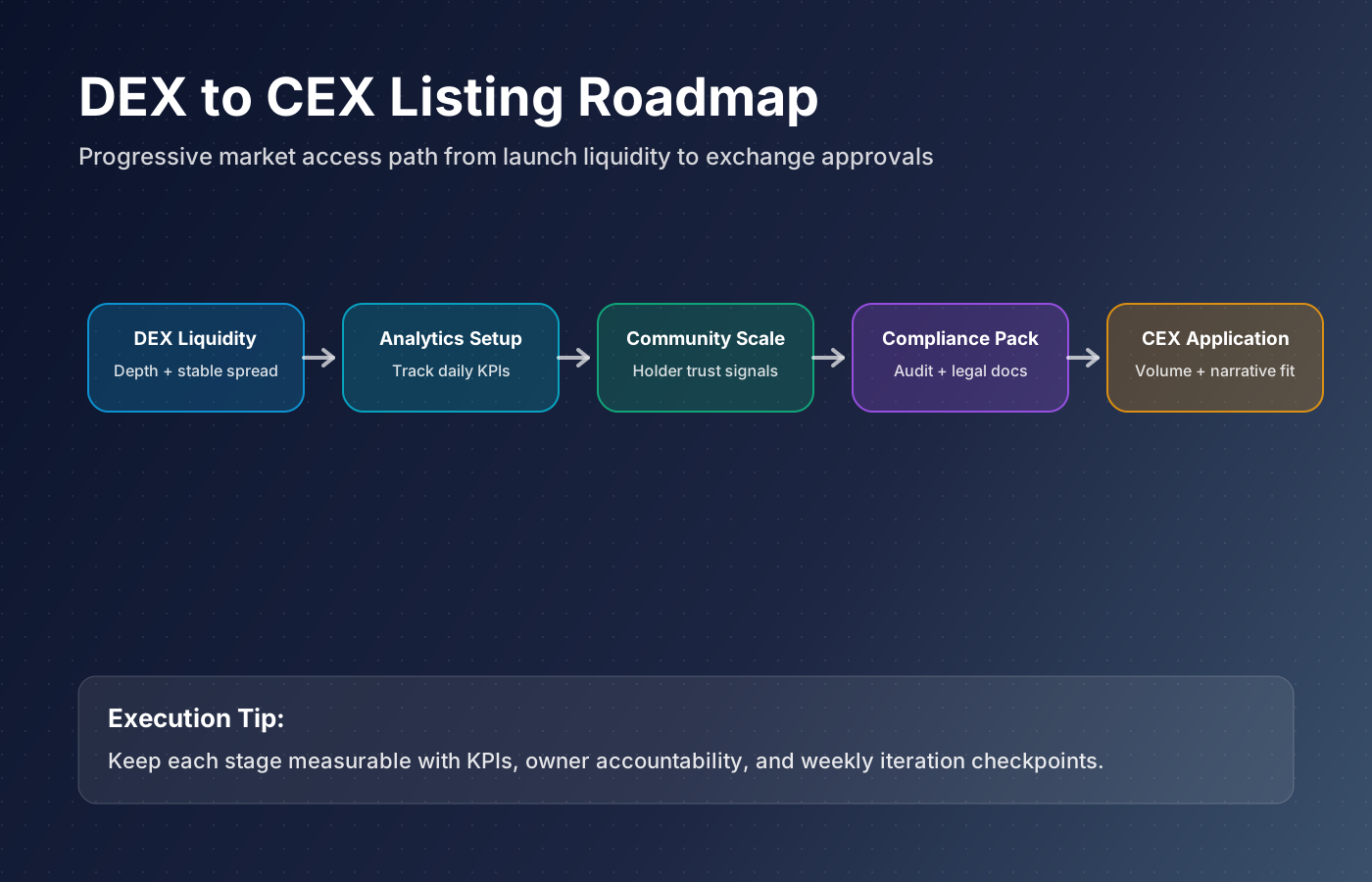
Exchange listings represent critical milestones for memecoin projects, transforming tokens from private experiments into tradeable assets accessible to global investors. Understanding the distinct requirements for decentralized exchanges (DEXs), centralized exchanges (CEXs), and major aggregators like CoinGecko and CoinMarketCap is essential for strategic growth. This guide provides actionable strategies for each listing stage.
What Are DEXs and CEXs?
Before pursuing listings, understand the fundamental differences between exchange types and their strategic implications.
Decentralized Exchanges (DEXs)
DEXs operate without central authority, enabling peer-to-peer trading through smart contracts:
- No KYC requirements: Users trade directly from wallets
- Permissionless listing: Anyone can create trading pairs
- Self-custody: Users maintain control of funds
- Lower barriers: No application process required
- Immediate availability: Trading begins instantly with liquidity
Popular DEXs by blockchain:
| Blockchain | Primary DEXs | TVL (Approx) |
|---|---|---|
| Solana | Raydium, Orca, Jupiter | $2B+ |
| Ethereum | Uniswap, SushiSwap | $5B+ |
| Base | Aerodrome, BaseSwap | $500M+ |
| BNB Chain | PancakeSwap, Biswap | $1.5B+ |
| Arbitrum | Camelot, Zyberswap | $300M+ |
Centralized Exchanges (CEXs)
CEXs operate as traditional businesses managing user funds and executing trades:
- KYC required: Users must verify identity
- Application process: Projects must apply and be approved
- Custodial: Exchange holds user funds
- Higher barriers: Require volume, community, and compliance
- Major visibility: Listings drive significant exposure and volume
CEX Tiers:
| Tier | Examples | Requirements | Listing Timeline |
|---|---|---|---|
| Tier 1 | Binance, Coinbase, Kraken | $10M+ volume, audits, regulation | 3-6 months |
| Tier 2 | Gate.io, MEXC, Bitget | $100K+ volume, community | 2-8 weeks |
| Tier 3 | Smaller regional exchanges | Basic requirements | 1-4 weeks |
Why Exchange Listings Matter
Exchange listings directly impact project success through multiple channels:
Liquidity and Price Discovery
- Listings create markets where buyers and sellers meet
- More exchanges mean more liquidity depth
- Price arbitrage across exchanges stabilizes valuations
- Professional traders require multiple access points
Visibility and Credibility
- CoinGecko and CoinMarketCap listings require exchange presence
- CEX listings signal project legitimacy
- Press coverage often follows major listings
- Investor confidence increases with exchange access
Community Growth
- Trading access enables broader participation
- Exchange communities (Gate.io, MEXC) add holders
- Listing announcements create marketing moments
- Accessibility reduces friction for new investors
Step 1: DEX Listing Process
DEX listings are the fastest path to trading availability. Here's how to list on major DEXs across different blockchains.
Solana DEX Listings
Raydium (Most Popular)
- Create liquidity pool through Raydium's "Create Pool" feature
- Provide token and SOL in desired ratio (typically equal value)
- Set initial price based on your valuation
- Confirm transaction and pay minimal fees (~$0.01)
- Trading begins immediately
Jupiter (Aggregator)
- Automatically includes tokens with Raydium/Orca liquidity
- No separate application needed
- Aggregates liquidity across Solana DEXs
Orca
- Create pool through Orca's interface
- Concentrated liquidity options available
- Lower fees for LP providers
Ethereum/Base DEX Listings
Uniswap (Largest DEX)
- Navigate to Uniswap "Pool" section
- Select "Create Pool" and connect wallet
- Add your token contract address
- Choose fee tier (0.05%, 0.3%, or 1%)
- Provide initial liquidity (token + ETH)
- Confirm and pay gas fees ($5-50 depending on network)
Aerodrome (Base)
- Create pool through Aerodrome interface
- Base offers lower gas fees (~$0.01-0.10)
- Growing memecoin ecosystem
BNB Chain DEX Listings
PancakeSwap
- Access "Liquidity" section
- Add your token and BNB
- Set amounts and approve tokens
- Confirm transaction (~$0.10-0.50)
DEX Listing Best Practices
Initial Liquidity Amounts
| Market Cap Target | Recommended Liquidity |
|---|---|
| Under $100K | $5,000-10,000 |
| $100K-$1M | $10,000-50,000 |
| $1M-$10M | $50,000-200,000 |
| $10M+ | $200,000+ |
Liquidity Locking
- Lock LP tokens for minimum 6 months
- Use Team Finance, Unicrypt, or DXSale
- Publish lock transaction publicly
- Consider burning LP tokens for maximum trust
Step 2: CoinGecko and CoinMarketCap Listings
Major aggregators require specific criteria before listing tokens. These listings significantly increase visibility.
CoinGecko Listing Requirements
CoinGecko is generally more accessible for new memecoins:
Mandatory Requirements:
- Functional website with complete information
- Detailed whitepaper explaining project
- Working contract on supported blockchain
- Initial trading activity on recognized DEX
- Public team information (preferred)
Submission Process:
- Access CoinGecko "Request Form"
- Provide contract address and token details
- Submit website and whitepaper links
- Include social media links
- Wait 2-8 weeks for review
Approval Factors:
- Professional website design
- Active social media presence
- Trading volume on listed DEXs
- Community size and engagement
- Clear tokenomics documentation
CoinMarketCap Listing Requirements
CoinMarketCap maintains stricter standards:
Mandatory Requirements:
- Professional website (MemecoinLab websites meet requirements)
- Detailed whitepaper
- Active community (5,000+ members preferred)
- Trading volume on multiple exchanges
- CoinGecko listing (often helps)
Submission Process:
- Create CoinMarketCap account
- Complete detailed application form
- Provide extensive project documentation
- Submit exchange proof with trading volume
- Wait 4-12 weeks for review
Key Differentiators:
- Multi-exchange presence
- Higher trading volume thresholds
- More rigorous team verification
- Stricter community metrics
| Metric | CoinGecko | CoinMarketCap |
|---|---|---|
| Review Time | 2-8 weeks | 4-12 weeks |
| Volume Required | Lower | Higher |
| Community Size | 1,000+ preferred | 5,000+ preferred |
| CEX Required | No | Preferred |
Step 3: Tier 2 CEX Listings
Tier 2 CEXs offer balance between accessibility and credibility. These exchanges are achievable for growing memecoins.
Popular Tier 2 Exchanges
Gate.io
- Large memecoin selection
- Community voting for listings
- Listing fees: $0-30,000 or revenue share
- Requirements: Active community, trading volume
MEXC Global
- Aggressive memecoin listings
- Often lists quickly for trending tokens
- Listing fees: Variable, sometimes free
- Requirements: Community demand, volume
Bitget
- Growing memecoin presence
- Professional listing team
- Listing fees: $10,000-50,000
- Requirements: Community, volume, basic compliance
BingX
- Emerging memecoin support
- Competitive fees
- Requirements: Standard documentation
CEX Application Process
Step 1: Preparation
- Professional website (required)
- Complete whitepaper
- Active social media (Twitter, Telegram, Discord)
- Community of 5,000+ members
- Trading volume documentation
- Security audit (preferred)
Step 2: Application
- Visit exchange's listing application page
- Complete comprehensive form
- Provide all requested documentation
- Include community metrics and proof
- Submit and await response
Step 3: Negotiation
- Discuss listing fees and terms
- Consider revenue-sharing alternatives
- Negotiate marketing support
- Finalize timeline
Step 4: Technical Integration
- Provide contract details
- Share liquidity for market making
- Coordinate announcement timing
- Prepare community for listing
CEX Listing Requirements Summary
| Requirement | Minimum | Preferred |
|---|---|---|
| Community Size | 3,000 | 10,000+ |
| Daily Volume | $50,000 | $100,000+ |
| Holders | 1,000 | 5,000+ |
| Website | Basic | Professional |
| Whitepaper | Required | Detailed |
| Audit | Optional | Completed |
| Liquidity Lock | Required | 1+ Year |
Step 4: Tier 1 CEX Strategy
Tier 1 exchanges like Binance and Coinbase require substantial track records and metrics.
Tier 1 Requirements
Binance
- Market cap typically $10M+
- Daily volume $500,000+
- Large, active community (50,000+)
- Completed security audit
- Regulatory compliance
- Proven track record (6+ months)
Coinbase
- US regulatory compliance
- Security audit from recognized firm
- Insurance considerations
- Detailed legal documentation
- Higher market cap requirements
Tier 1 Strategy
- Build track record: 6-12 months of operation
- Grow metrics: Volume, holders, community
- Complete audit: Professional security review
- Establish presence: Multiple Tier 2 listings first
- Network: Connections with listing teams
- Apply: Submit comprehensive application
Listing Fees and Costs
Understanding the cost structure helps with budgeting and negotiation.
Fee Ranges by Exchange Type
| Exchange Type | Typical Fee | Range |
|---|---|---|
| DEX | $0 | $0 (just gas) |
| Tier 3 CEX | $5,000-15,000 | Sometimes free |
| Tier 2 CEX | $15,000-50,000 | $0-100,000 |
| Tier 1 CEX | $100,000-500,000 | Varies widely |
Alternative Fee Structures
- Revenue Share: Percentage of trading fees instead of upfront
- Marketing Packages: Fee includes promotion
- Community Voting: Free if community votes approval
- Launchpad: Token sale through exchange
Hidden Costs
- Market making support: $10,000-50,000
- Legal review: $5,000-20,000
- Technical integration: $1,000-5,000
- Marketing coordination: $5,000-20,000
Common Listing Mistakes to Avoid
- Incomplete documentation: Missing website, whitepaper, or social links
- Low liquidity: Insufficient trading pool turns away users
- No community proof: Exchanges require demonstrated interest
- Unlocked liquidity: Red flag for both exchanges and investors
- Premature applications: Applying before meeting requirements
- Poor communication: Slow or unprofessional responses to exchanges
- Ignoring Tier 2: Going directly to Tier 1 without building credentials
Listing Timeline Summary
| Milestone | Timeline |
|---|---|
| DEX Listing | Day 1 |
| Liquidity Lock | Day 1 |
| CoinGecko Application | Week 1-2 |
| Tier 2 CEX Applications | Week 2-4 |
| CoinGecko Approval | Week 4-10 |
| First Tier 2 Listing | Week 4-12 |
| CoinMarketCap Application | Month 2-3 |
| Additional Tier 2 Listings | Month 2-6 |
| Tier 1 Consideration | Month 6+ |
Summary
Exchange listings follow a predictable progression from DEX to Tier 2 CEX to major aggregators and potentially Tier 1 exchanges. Start with DEX liquidity provision immediately after launch, then pursue CoinGecko and Tier 2 CEXs as your metrics grow. Professional branding, complete documentation, and active communities significantly improve approval rates across all platforms.
Ready to pursue listings? Check our exchange listing services or contact our team for personalized guidance.
Source and Verification Notes
This article is educational content for builders. For facts that can change, verify the current details before acting: