
Tokenomics—the economic design of a cryptocurrency token—is one of the most critical factors determining a memecoin's success or failure. While viral marketing and community building drive initial attention, sustainable growth depends on sound economic principles that align incentives between developers, early investors, and long-term holders. This guide provides a comprehensive framework for designing tokenomics that attract investors and support lasting project viability.
What is Tokenomics?
Tokenomics combines "token" and "economics" to describe the economic model governing a cryptocurrency. It encompasses every aspect of how tokens are created, distributed, used, and destroyed within a project's ecosystem. For memecoins, well-designed tokenomics can mean the difference between a project that thrives for years and one that collapses within days.
Core Components of Tokenomics
Understanding the fundamental elements of token design is essential before making specific decisions:
Supply Parameters: Total supply, circulating supply, maximum supply, and emission rates determine scarcity and value perception.
Distribution Allocation: How tokens are divided among liquidity pools, team members, marketing funds, community rewards, and other purposes.
Vesting Schedules: Time-locked release mechanisms that prevent sudden token dumps and demonstrate long-term commitment.
Utility Functions: What holders can do with tokens—governance, staking, trading, accessing features, or earning rewards.
Burn Mechanisms: Permanent token destruction that creates deflationary pressure and increases scarcity over time.
Transaction Taxes: Fees applied to buys, sells, or transfers that fund development, marketing, or holder rewards.
Why Tokenomics Matters for Memecoins
The memecoin market has matured significantly since Dogecoin's 2013 launch. Today's investors conduct thorough due diligence before committing capital, making professional tokenomics essential for credibility and trust.
Investor Confidence Building
Sophisticated investors use tokenomics as a primary screening tool. Key red flags include:
- Team allocations exceeding 15% of total supply
- Unlocked developer tokens that could be dumped
- Missing or unclear liquidity lock information
- Hidden mint functions or owner privileges
- Unrealistic supply figures without clear rationale
Projects with transparent, investor-friendly tokenomics consistently outperform those with questionable designs. According to DEXTools data, memecoins with locked liquidity and reasonable team vesting maintain holder counts longer than those without.
Exchange Listing Requirements
Both decentralized and centralized exchanges evaluate tokenomics before listing:
| Exchange Type | Tokenomics Requirements |
|---|---|
| DEX (Uniswap, Raydium) | Liquidity provision, optional locks |
| CoinGecko | Website, whitepaper, circulating supply data |
| CoinMarketCap | Detailed tokenomics page, verified contracts |
| Tier 2 CEX (Gate, MEXC) | Security audit, vesting proof, team verification |
| Tier 1 CEX (Binance, Coinbase) | Full audit, regulatory compliance, proven track record |
Professional tokenomics design accelerates the listing process and opens doors to premium exchanges. Learn about our exchange listing services.
Long-Term Price Stability
Well-designed tokenomics create natural price supports:
- Locked liquidity prevents rug pulls and builds trading confidence
- Vesting schedules ensure gradual, predictable token releases
- Burn mechanisms create deflationary pressure during high activity
- Staking incentives encourage holding over selling
Token Supply Design
Supply decisions significantly impact investor perception and price dynamics. There's no single "correct" supply—the key is consistency between supply, price targets, and market cap expectations.
Supply Ranges and Their Implications
Low Supply (1M - 100M tokens)
- Higher per-token prices create perception of value
- Smaller market cap needed for price milestones
- Better suited for serious, utility-focused projects
- Example: Bitcoin's 21M cap creates scarcity narrative
Medium Supply (100M - 10B tokens)
- Balanced approach for most memecoins
- Accessible entry prices for retail investors
- Room for growth without psychological barriers
- Examples: Dogecoin, Shiba Inu
High Supply (10B - 1T+ tokens)
- Very low per-token prices (fractions of cents)
- Attracts investors seeking "next Bitcoin" narrative
- Requires larger market caps for meaningful prices
- Popular for meme-driven speculation
Supply Considerations
When determining supply, consider these factors:
- Target Price Psychology: Investors prefer "whole number" prices. A 1B supply with $10M market cap = $0.01/token, while 1T supply = $0.00001/token.
- Decimals: Most tokens use 18 decimals (Ethereum standard) or 9 decimals (Solana standard). Ensure your supply works cleanly with chosen decimals.
- Burn Potential: High supply tokens benefit more visually from burns (burning 1B from 1T shows more impact than 1M from 10M).
- Competitor Comparison: Research similar successful projects and align supply with market expectations.
Use our free Tokenomics Generator to experiment with different supply scenarios and visualize outcomes.
Token Distribution Strategy
Distribution allocation communicates project priorities and intentions to investors. Every percentage point matters in building or destroying trust.
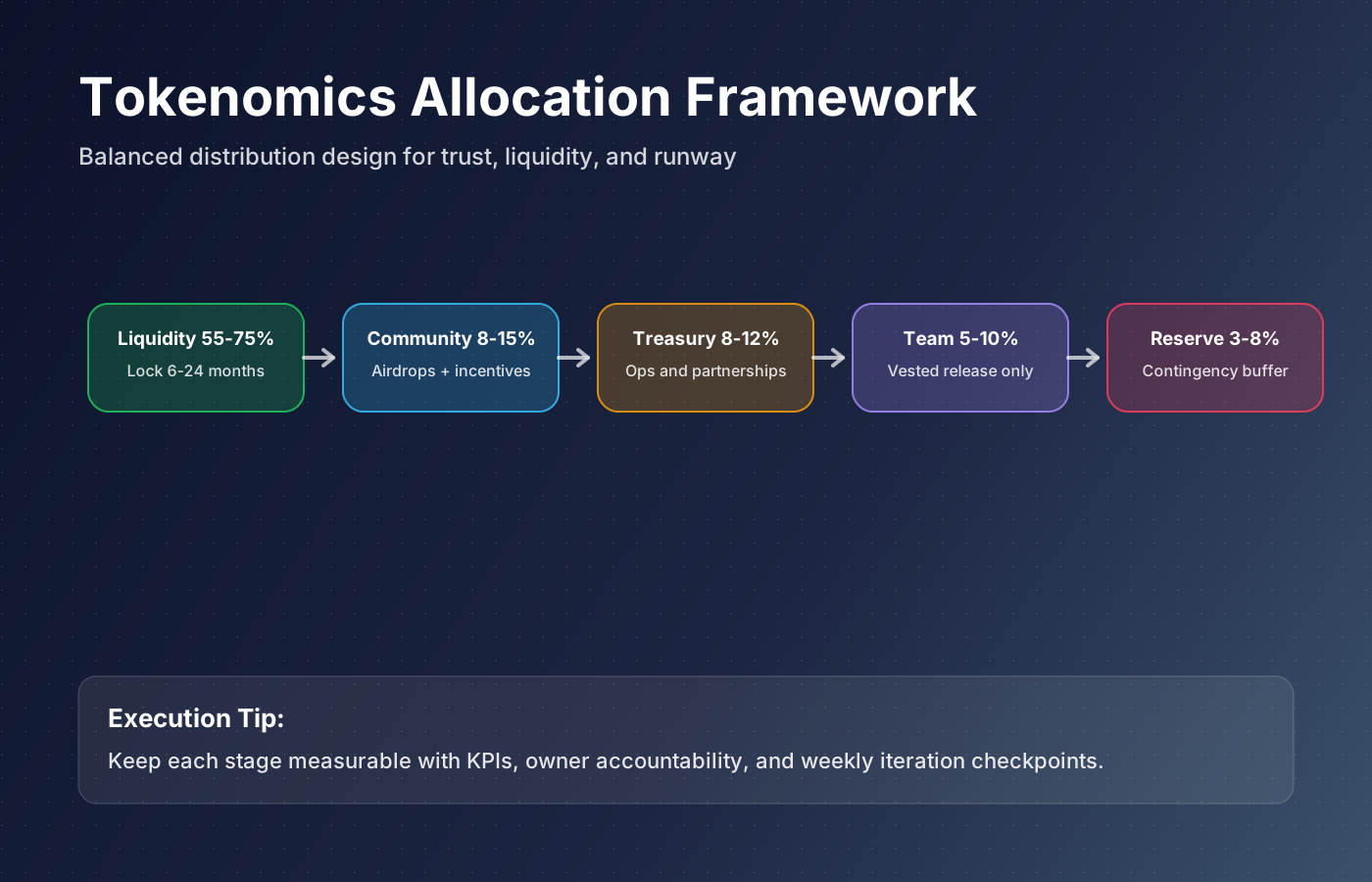
Recommended Allocation Framework
Based on analysis of successful memecoin launches, here's a battle-tested distribution model:
Liquidity Pool: 50-80%
The largest allocation should fund trading liquidity. Higher percentages signal stronger commitment:
| Allocation | Investor Perception | Recommended For |
|---|---|---|
| 50-60% | Standard, acceptable | Established teams with track records |
| 60-70% | Good, shows commitment | Most new projects |
| 70-80% | Excellent, maximum trust | Community-first projects, fair launches |
| 80%+ | Exceptional, rug-proof claims | Fair launch memes, no team allocation |
Best Practices for Liquidity:
- Lock LP tokens for minimum 6 months (ideally 1-3 years)
- Use verified locking platforms: Team Finance, Unicrypt, DXSale
- Publish lock transaction hashes publicly
- Consider burning LP tokens permanently for maximum trust signal
Team Allocation: 5-10%
Keep team allocation modest. Large developer stakes raise immediate concerns:
- 5%: Industry standard for community-focused projects
- 10%: Maximum acceptable without raising red flags
- 15%+: Automatically flagged by due diligence tools
Team Vesting Requirements:
- Minimum 6-month cliff before any tokens release
- 12-24 month linear vesting after cliff
- Public vesting schedule with verification links
- Smart contract-enforced vesting preferred over manual promises
Marketing and Development: 5-15%
Funds for ongoing promotion, partnerships, and feature development:
- 5-8%: Minimum for basic marketing needs
- 8-12%: Recommended for serious growth ambitions
- 12-15%: For projects planning extensive campaigns
Vesting Considerations:
- Consider vesting 50% of marketing allocation
- Reserve portion for immediate launch promotion
- Document planned marketing activities in roadmap
Community Rewards: 5-10%
Airdrops, competitions, and community incentives drive engagement:
- Airdrop to early supporters and active community members
- Meme contest prizes
- Referral rewards
- Ambassador program funding
- Liquidity mining incentives
Reserve Fund: 0-5%
Optional allocation for unexpected opportunities or emergencies:
- CEX listing fees
- Emergency liquidity support
- Strategic partnership investments
- Legal and compliance costs
Distribution Visualization
A sample distribution for a 1 billion token supply:
| Allocation | Percentage | Token Amount | Lock Period |
|---|---|---|---|
| Liquidity Pool | 70% | 700,000,000 | 2 years (or burned) |
| Team | 7% | 70,000,000 | 6mo cliff + 18mo vest |
| Marketing | 10% | 100,000,000 | 50% unlocked, 50% 6mo vest |
| Community | 8% | 80,000,000 | Unlocked for airdrops |
| Reserve | 5% | 50,000,000 | 12 month vest |
Vesting Schedule Design
Vesting prevents token dumps and demonstrates long-term commitment. Understanding different vesting structures helps choose the right approach.
Vesting Structure Types
Linear Vesting
- Tokens release evenly over time
- Example: 1000 tokens over 12 months = 83.3 tokens/month
- Predictable and transparent
- Most common for team allocations
Cliff Vesting
- No tokens release until a specific date
- Then full or accelerated release begins
- Example: 6-month cliff, then linear vesting
- Common for team tokens to ensure commitment
Graded Vesting
- Increasing percentages release over time
- Example: 10% at 6 months, 20% at 12 months, etc.
- Rewards longer commitment
- Can align with project milestones
Immediate Vesting
- All tokens available immediately
- Only appropriate for community airdrops
- High risk for team or investor allocations
Recommended Vesting Templates
Team Tokens (Standard)
- 6-month cliff: 0 tokens released
- Months 7-24: Linear monthly releases
- Total duration: 24 months
- Result: Demonstrates 2-year commitment
Marketing Allocation
- 50% available at launch for initial promotion
- 50% vested over 6 months for sustained campaigns
- More flexibility than team vesting
Investor/Private Sale Tokens
- 3-month cliff minimum
- 6-12 month linear vesting
- Prevents immediate sell pressure
Burn Mechanisms and Deflationary Design
Token burns permanently remove tokens from circulation, creating deflationary pressure that can support prices.
Burn Implementation Methods
Transaction Burns
- Fixed percentage (1-5%) of each transaction burned
- Automatic and transparent
- Creates continuous deflationary pressure
- May discourage trading if too high
Manual Burns
- Team burns tokens at specific milestones
- Based on trading volume, price targets, or time
- Requires trust in team execution
- Can create positive news events
Buyback and Burn
- Protocol revenue used to buy and burn tokens
- Common in DeFi applications
- Links token value to protocol success
- Requires revenue generation mechanism
Optimal Burn Rates
| Burn Rate | Trading Impact | Price Impact | Recommended Use |
|---|---|---|---|
| 0-1% | Minimal friction | Slight positive | General purpose |
| 1-3% | Some friction | Moderate positive | HODL-focused tokens |
| 3-5% | Notable friction | Strong positive | Diamond hand narrative |
| 5%+ | High friction | Uncertain | Very specific use cases |
Transaction Tax Structures
Transaction taxes fund project development while potentially rewarding holders. Understanding tax implications is crucial for memecoin design.
Common Tax Models
Development Tax
- 1-5% fee on transactions
- Funds marketing, development, operations
- Typically directed to team wallet
- Should be documented transparently
Reflection Tax
- 1-10% redistributed to all holders
- Rewards long-term holders automatically
- Popular for "passive income" narratives
- Can create complex tax implications
Liquidity Tax
- 1-3% added to liquidity pool automatically
- Creates growing price floor
- Reduces volatility over time
- Benefits long-term stability
Combined Taxes
- Mix of above mechanisms
- Example: 2% reflection + 2% liquidity + 2% development
- Can become complex and expensive
- Total tax should rarely exceed 10%
Tax Implementation Considerations
- High taxes discourage trading and reduce liquidity
- Consider different buy/sell tax rates (lower buy tax encourages entry)
- Document all taxes clearly in website and whitepaper
- Use verified tax structures from audited contracts
Advanced Tokenomics Features
For projects seeking differentiation, advanced features can add utility and engagement.
Staking Mechanisms
Staking locks tokens for rewards, reducing sell pressure:
- APY ranges: 5-20% for memecoins (higher rates for longer locks)
- Lock periods: 7 days to 1 year options
- Reward sources: Transaction taxes, minting, or pre-allocated pool
- Benefits: Price stability, holder loyalty, governance rights
Governance Integration
Token voting rights create community ownership:
- Proposal submission thresholds
- Voting weight proportional to holdings
- Quorum requirements for decisions
- Execution mechanisms for passed proposals
NFT Integration
Cross-platform utility with NFT collections:
- Exclusive NFTs for token holders
- NFT-gated features and communities
- Airdrop eligibility based on holdings
- Marketplace fee discounts
Tokenomics Audit and Optimization
Before launch, thoroughly audit your tokenomics design:
Self-Assessment Checklist
- Total supply and rationale documented
- Distribution percentages justified
- Team allocation under 15%
- Liquidity allocation over 50%
- Vesting schedules clearly defined
- Lock platforms and durations specified
- Burn mechanisms (if any) explained
- Transaction taxes (if any) justified
- All allocations sum to 100%
- Whitepaper includes complete tokenomics
Third-Party Verification
Consider professional review from:
- Smart contract auditors
- Tokenomics consultants
- Legal advisors (for regulatory compliance)
- Community feedback before finalization
Contact MemecoinLab for professional tokenomics design and review services.
Common Tokenomics Mistakes to Avoid
Learn from failed projects:
- Excessive team allocation: Anything above 15% immediately flags concerns
- Missing liquidity lock: Rug pull risk destroys investor confidence
- Unrealistic vesting: Short cliffs and fast releases signal exit intentions
- Hidden mechanics: Undisclosed mint functions or taxes break trust permanently
- Overcomplicated design: Too many features confuse investors
- Missing documentation: Undocumented tokenomics lead to speculation and distrust
- Ignoring competition: Tokenomics misaligned with market expectations fail
Summary
Successful tokenomics design balances investor confidence, project sustainability, and market expectations. Focus on transparency, reasonable allocations, and clear documentation. Lock liquidity generously, vest team tokens appropriately, and document everything thoroughly. Professional tokenomics isn't optional in 2026—it's the foundation of credible memecoin launches.
Ready to design your tokenomics? Use our free Tokenomics Generator or contact our team for professional design services.
Source and Verification Notes
This article is educational content for builders. For facts that can change, verify the current details before acting: